The AFCON final 2026 clash between Morocco and Senegal will be remembered less for tactics. Infact it will be remembered more for the chaotic scenes that unfolded after the 90th minute. What happened exposed deep frustrations around officiating, fairness, and governance in African football.
“Football should unite nations—but on this night, it exposed uncomfortable truths.”
A Chronological Account of the Madness
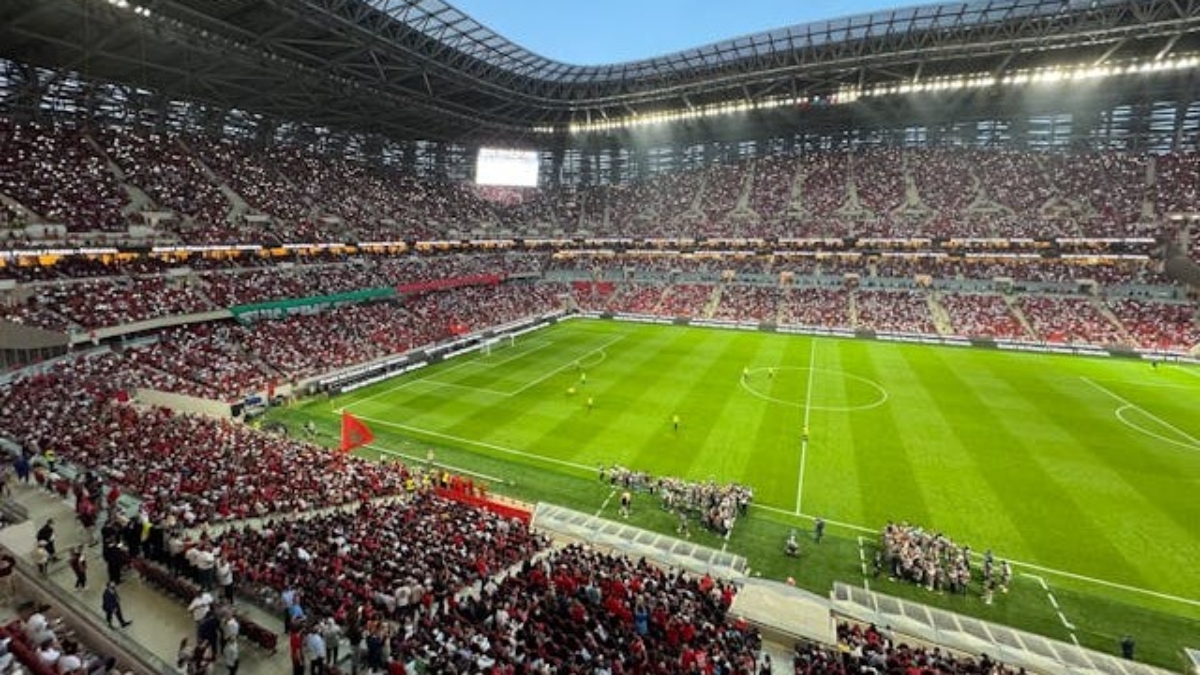
The 2026 AFCON final between Morocco and Senegal was a slow burner until the clock hit the 90th minute. What followed was 30 minutes of absolute mayhem that will be debated for decades.
90+2’ – The Disallowed Goal: Senegal’s Ismaila Sarr bundled the ball home for what looked like a winner. However, referee Jean Jacques Ndala quickly blew his whistle for a soft foul by Abdoulaye Seck on Morocco’s Achraf Hakimi in the build-up. Replays showed minimal contact, and many analysts argued the goal should have stood, as VAR could not intervene due to the premature whistle. This decision set the tone for the controversy to follow.
90+8’ – The Penalty Call: Just minutes later, the referee was called to the VAR monitor to review a challenge by Senegal’s El Hadji Malick Diouf on Brahim Díaz. After review, a penalty was awarded for what many described as a “soft” shirt pull or hold around the neck. Senegal players and fans erupted in protest, viewing it as inconsistent officiating compared to their disallowed goal.
90+12’ – The Walk-off: Incensed by the perceived injustice, Senegal manager Pape Thiaw ordered his players to leave the pitch. For 14 minutes, the match hung in the balance as the Lions of Teranga retreated to the tunnel.
The Leadership of Sadio Mané: In a display of pure sportsmanship, it was Sadio Mané who refused to give up. He followed his teammates into the tunnel and escorted them back onto the pitch.
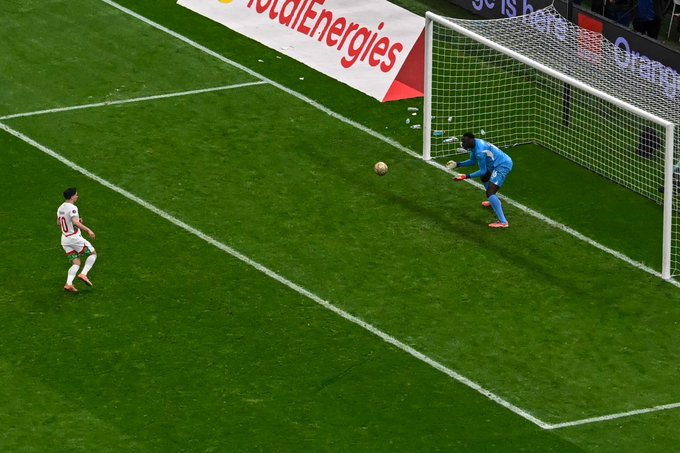
The Penalty Duel: With play resuming, Morocco’s Youssef En-Nesyri was set to take the penalty, but Brahim Díaz snatched the ball from him and attempted a cheeky Panenka. Senegal goalkeeper Édouard Mendy barely moved, catching the weak effort straight down the middle. The miss was labeled “the worst penalty I’ve seen” by some commentators, sending the game to extra time.
The Miss: Amidst fans attempting to raid the pitch, Diaz attempted a cheeky Panenka—but Edouard Mendy stood his ground and caught it with ease.
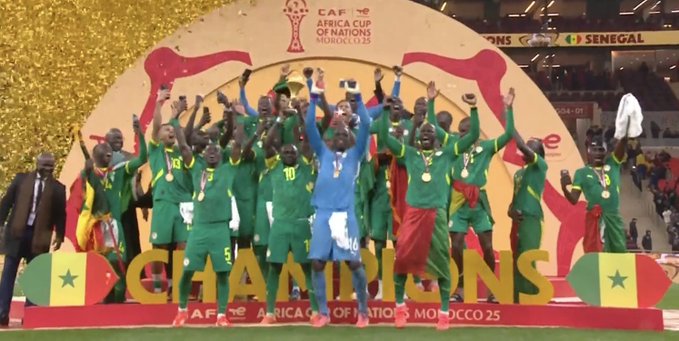
94’ (Extra Time) – Poetic Justice:Pape Gueye unleashed an absolute thunderbolt from outside the box. The ball flew into the top corner, giving the Moroccan goalkeeper no chance. Senegal had taken the lead in the most dramatic fashion imaginable.The goal was legitimate. This time, there was no controversy. Senegal held on to win one of the most chaotic matches in AFCON history.
Sadio Mané’s Powerful Post-Match Statement
In the aftermath, Sadio Mané’s words resonated across the continent:
“Because the referee can make a mistake, it’s not fair to judge him. And most importantly, I did it for the people in the whole world, they wanted to watch the game.”
Mané’s statement was profound in its simplicity. He acknowledged the injustice but chose to rise above it. His decision to bring his teammates back wasn’t about accepting poor officiating—it was about protecting the game itself.
He understood that walking off would have robbed millions of fans worldwide of the spectacle they deserved.
The Press Conference Clash
The drama didn’t end on the pitch. During Senegal head coach Pape Thiaw’s post-match press conference, a physical clash erupted between journalists.
The tense atmosphere that had defined the match spilled over into the media room. Reporters, presumably divided along national lines, engaged in a confrontation that required security intervention.
What This Means for African Football
The Specter of Corruption
The Morocco vs Senegal match reignited longstanding concerns about corruption in African football. Social media exploded with allegations ranging from biased officiating to outright match-fixing.
Whether these allegations hold merit or not, the perception of injustice is damaging in itself. When fans cannot trust that matches are decided fairly, the entire competition loses legitimacy.
Key concerns raised:
Why was Senegal’s goal disallowed with minimal explanation?
How was Morocco awarded a penalty so deep into stoppage time?
What mechanisms exist to hold referees accountable for controversial decisions?
Does CAF have adequate VAR protocols and are they being followed consistently?
Referee Training and Selection: Are officials receiving world-class training? Are the best referees being selected for crucial matches?
VAR Implementation: Is Video Assistant Referee technology being used effectively? Why do controversial decisions still slip through?
Accountability Mechanisms: What happens to referees who make egregious errors? Is there transparency in disciplinary processes?
Match Integrity Protocols: What safeguards exist to prevent corruption and ensure fair play?
The Double Standard
It’s worth noting that controversial refereeing decisions occur in every major tournament worldwide—UEFA Champions League, FIFA World Cup, Copa America. The difference is that when they happen in Africa, they’re used to reinforce narratives about continental incompetence.
This double standard is unfair, but it’s also the reality African football must navigate. Every controversy is amplified; every mistake is magnified.
Grow your Business through Web-Design Services, SEO, Google Ads and Digital Marketing
Reintech Web Solutions is a leading web design agency based in Nairobi, Kenya, serving the wider market of Ruiru, Kiambu, and the Nairobi Metropolitan.
Add a Comment